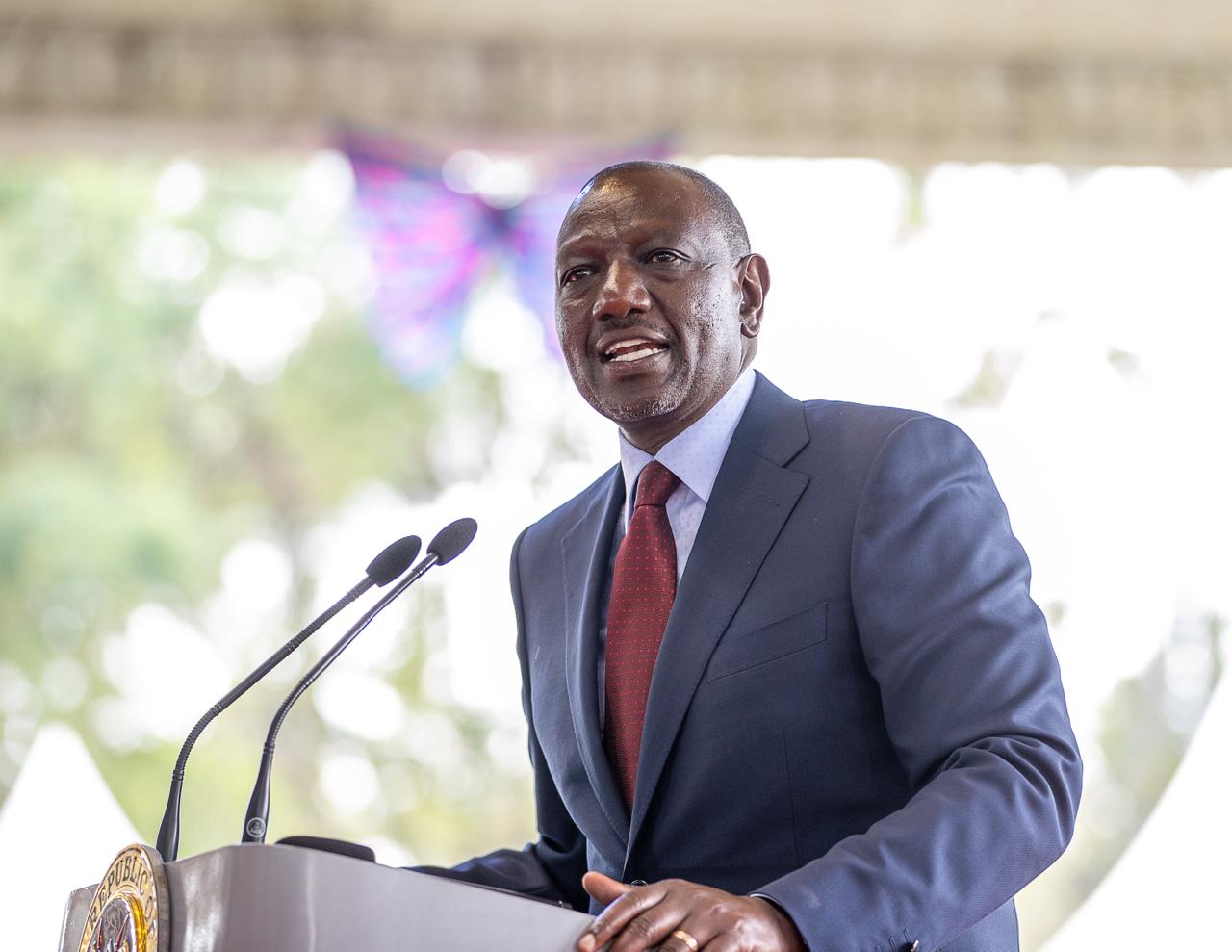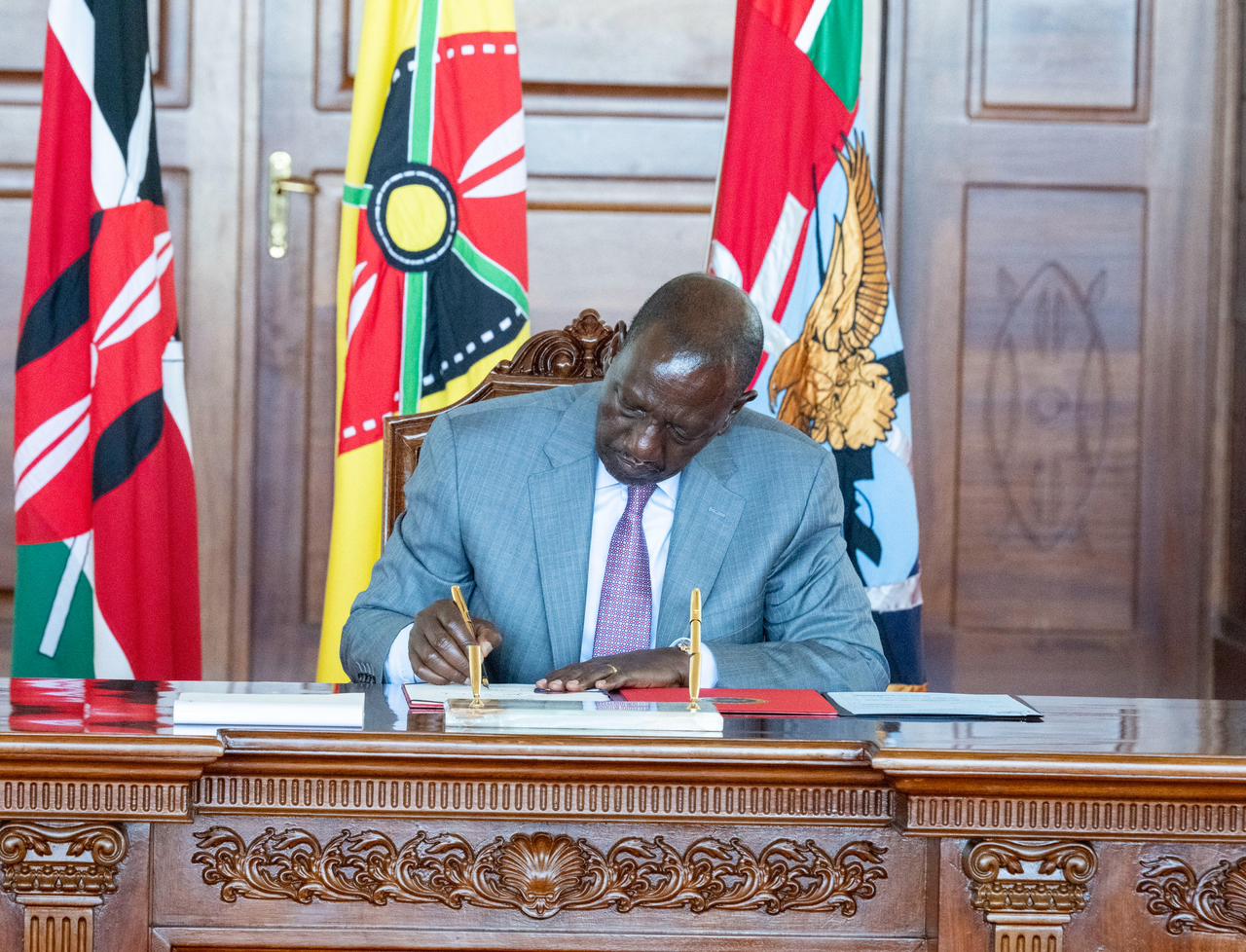
President William Ruto has signed into law the Meteorology Bill 2023, setting the stage for the creation of a new authority that will oversee weather services in the country and strengthen coordination within the sector.
The Head of State assented to the bill on Friday, March 13 during a ceremony held at State House in Nairobi. The new legislation provides a legal structure for the regulation, coordination, and monitoring of meteorological services across the country.
The Meteorology Bill 2023 was sponsored in the Senate by Majority Leader Aaron Cheruiyot. It seeks to improve how weather-related services are managed while aligning the sector with both national and international requirements.
While explaining the bill, Senate Clerk Jeremiah Nyegenye said the law will lead to the formation of the Kenya Meteorological Services Authority.
“The bill will establish an authority, the Kenya Meteorological Services Authority, which will be the successor of the Kenya Meteorological Department, which has operated under executive order under various ministries,” said Nyegenye.
The new authority will take over from the Kenya Meteorological Department, which currently operates under the Ministry of Environment. According to Nyegenye, the change will provide a clear legal framework to guide operations and oversight in the sector.
He also noted that the law will help the country meet international obligations related to meteorological services and improve coordination of weather information and forecasting.
During the same ceremony, President Ruto also signed the Miscellaneous Fees and Amendment Act, which was sponsored by the Leader of Majority in the National Assembly, Kimani Ichung’wah.
The new law creates the Railway Levy Development Fund and establishes a board that will oversee its management. It also broadens the use of funds collected through the Railway Development Levy so they can support the construction and expansion of the country’s railway network.
In addition, the president assented to the Coffee Bill 2023, which aims to transform Kenya’s coffee sector.
The law removes the responsibility for promotion, production, development, and marketing of coffee from the Agriculture and Food Authority and transfers those roles to a new body known as the Coffee Board.
The move is expected to reshape how the coffee industry is managed by placing these key functions under a dedicated institution.
The latest developments come only days after the president signed the National Infrastructure Fund Bill 2026 into law.
Ruto assented to the bill on Monday, March 9 during another ceremony at State House in Nairobi.
Speaking during that event, the Clerk of the National Assembly, Samuel Njoroge, explained that the law was developed through public participation and is designed to expand options for financing major infrastructure projects.
“This bill is intended to mobilize private capital from non-traditional sources of infrastructure finance. It is also intended to reduce the over-reliance on public debt and taxation to finance capital and corporate infrastructure projects,” he stated.
Njoroge said the law outlines the type of projects that the National Infrastructure Fund will support. These include national highways, expressways, railways, seaports, and airports.
He added that the legislation has also created two key bodies to manage the fund. These are a governing council and a board that will oversee operations and ensure the fund runs effectively.
Through the series of newly signed laws, the government aims to strengthen institutional management in sectors such as meteorology, agriculture, transport, and infrastructure development while expanding funding options for key national projects.